
Room Decor Ideas
Bedroom design ideas for a calm modern home
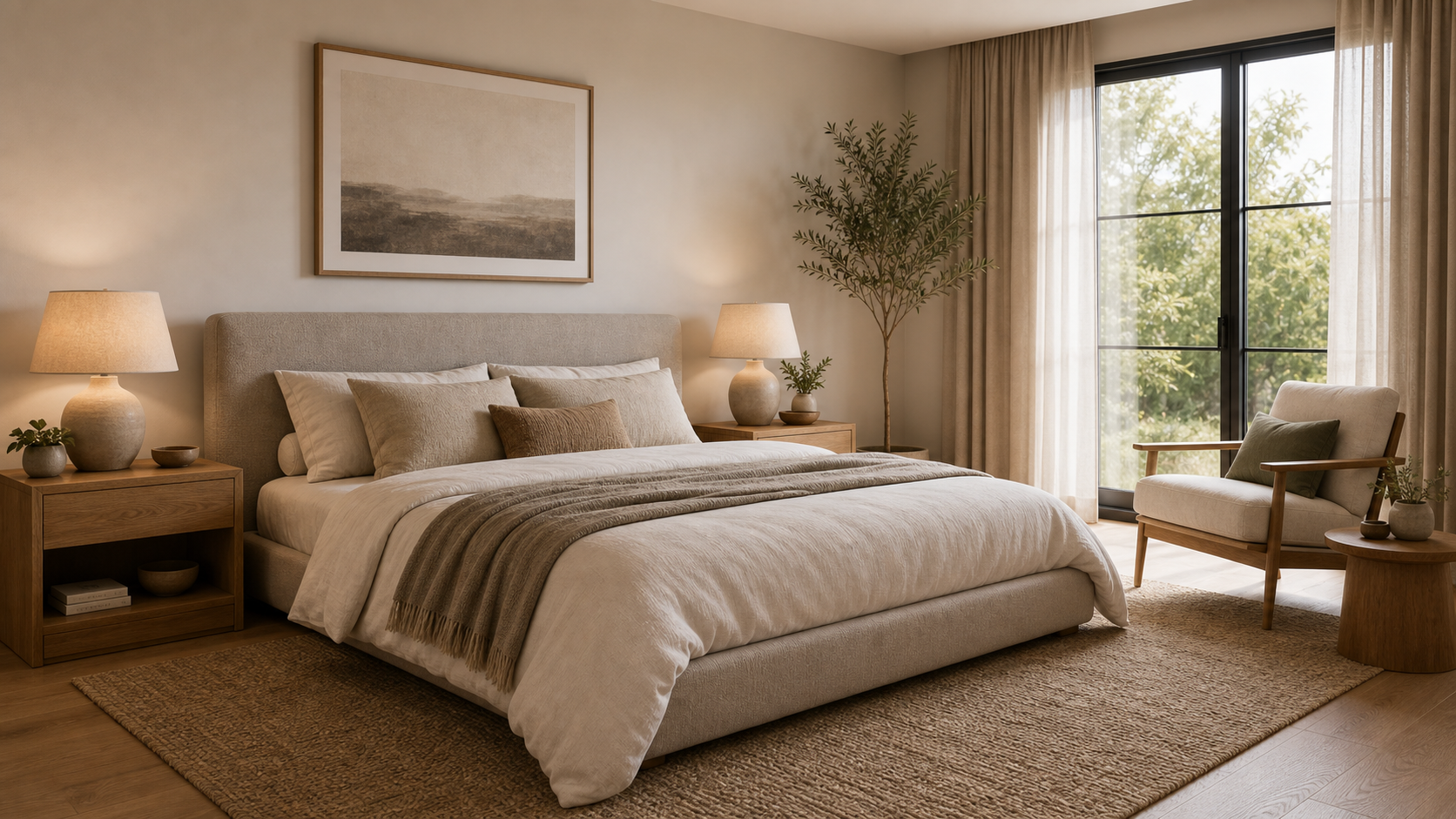
Bedroom design ideas work best when they begin with rest The bedroom is not only a place for a bed It is the room that receives the end of the day and prepares the start of the next one A calm modern bedroom should feel simple warm useful and easy to reset
The strongest bedroom design does not come from adding many objects It comes from choosing the right layout the right color mood the right storage and the right texture Each part should help the room feel quieter and more comfortable
A modern bedroom can feel clean without feeling cold It can feel stylish without becoming difficult to live with It can feel cozy without becoming crowded The goal is to build a room that supports sleep daily routines clothing storage reading and a soft morning rhythm
This pillar guide brings the full bedroom direction together It covers layout furniture scale color lighting bedding storage walls flooring and finishing details The satellite articles around it can go deeper into each topic but this page gives the full base for a calm modern bedroom
Start with the feeling of the room
Before choosing furniture or decor decide what the bedroom should feel like A calm bedroom usually needs softness order warm light and enough open space A modern bedroom usually needs clean shapes simple lines useful furniture and fewer distractions When these two ideas work together the room feels restful and still looks polished
Think about the first view from the doorway The bed may be the main thing people notice The floor path should look open The nightstands should feel balanced The wall behind the bed should feel intentional A bedroom starts to feel designed when the first view is clear and not crowded
Do not begin with small decor Begin with the mood A room can be warm and natural A room can be soft and neutral A room can be refined and minimal A room can be cozy and layered Once the mood is clear every later choice becomes easier
The best bedroom mood is connected to daily life If the room is small the feeling should be light and efficient If the room is large the feeling should be grounded and intimate If the room has little daylight it should use warm lamps and soft surfaces If the room gets strong sun it can carry deeper tones and heavier fabric
Plan the bedroom layout first
The layout is the quiet structure behind every good bedroom design A beautiful bed will not feel right if the walking path is tight A nice dresser will not help if drawers cannot open easily A chair will not feel relaxing if it blocks the way to the closet
Start with the bed because it is the anchor of the room In most bedrooms the bed works best on the longest solid wall or on the wall that gives the cleanest view from the doorway The bed should feel grounded and easy to approach from at least one side In a shared room both sides should feel usable when possible
Leave enough space around the bed for movement The walkway does not need to be huge but it should feel comfortable in real life People should be able to make the bed open drawers reach the closet and move at night without squeezing around furniture
After the bed place the nightstands They do not need to match perfectly but they should feel balanced in height and weight A slim nightstand can work in a small room A wider one can work when the bed wall needs more presence The lamp should sit where it can be reached from the bed
Then place the dresser wardrobe bench or chair only if the room can carry them A bedroom becomes calmer when every piece has a job If one piece only fills an empty corner but makes the path worse it may not belong in the room
Choose furniture that fits the scale
Furniture scale changes the whole feeling of a bedroom A bed that is too large can make the room feel trapped A dresser that is too deep can steal walking space A chair that is too bulky can turn a calm corner into a crowded one
Measure the room before choosing major pieces and think about how each piece will be used The bed frame should support the mattress without visually swallowing the wall Nightstands should hold the items you use every night without becoming clutter stations The dresser should store what you need without blocking doors or pathways
Low profile furniture often helps a modern bedroom feel open A bed with a simple frame can make the walls feel taller A dresser with clean lines can make storage feel calm A bench with slim legs can add function without making the foot of the bed feel heavy
In a small bedroom choose furniture that gives more than one benefit A bed with drawers can reduce the need for another cabinet A wall mounted nightstand can keep floor space clear A mirror can add function and reflect light A narrow dresser can work better than a wide one if the walking path matters more
In a larger bedroom the challenge is different The furniture should not float too far apart Use a rug bench chairs curtains and lighting to make the room feel connected The bedroom should feel generous but not empty
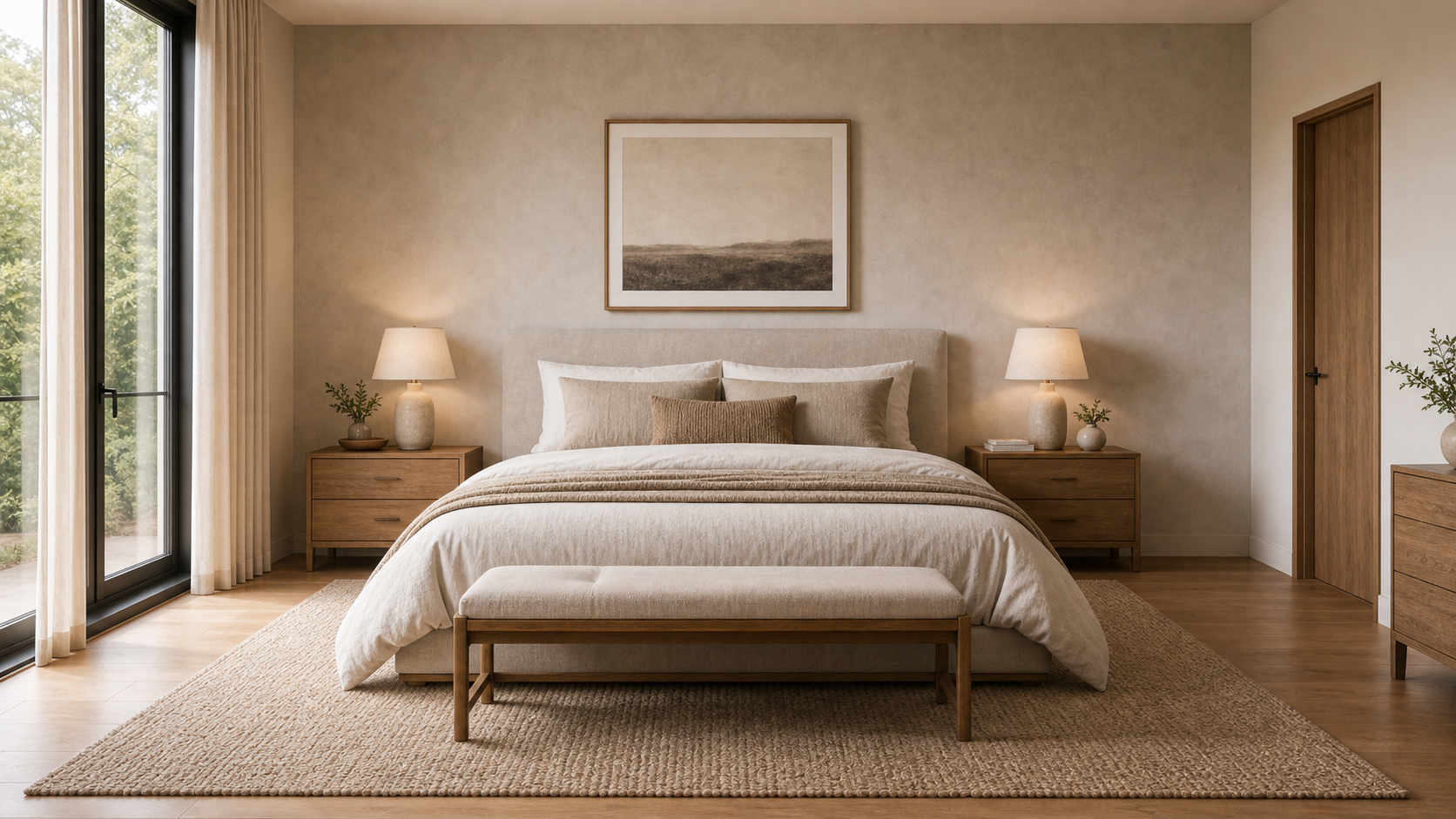
Build a calm color palette
Color is one of the fastest ways to change how a bedroom feels A calm modern bedroom usually works well with warm whites soft beige muted taupe pale grey clay olive muted blue charcoal or natural wood tones The exact colors matter less than the balance between them
Choose one base color that covers the largest surfaces This may be the walls bedding rug or curtains Then choose one support color for furniture or textiles Then choose one accent that appears in small moments such as pillows art books or a vase
A bedroom can feel modern when the palette is edited A bedroom can feel cozy when the colors have warmth A bedroom can feel peaceful when strong contrast is used carefully Too many colors can make the room feel active and busy Too little contrast can make it feel flat
Natural light should guide the palette A bright room can carry deeper tones more easily A darker room often needs lighter walls warm lamps and soft fabrics A north facing room may need warmer colors A sun filled room can handle cooler neutrals when wood and texture keep it from feeling cold
Repeat colors in small ways so the room feels connected A warm wood tone can appear in the bed frame nightstands and picture frames A soft olive tone can appear in a throw pillow and art A black accent can appear in lamp bases and curtain rods Repetition makes the design feel intentional
Use texture instead of clutter
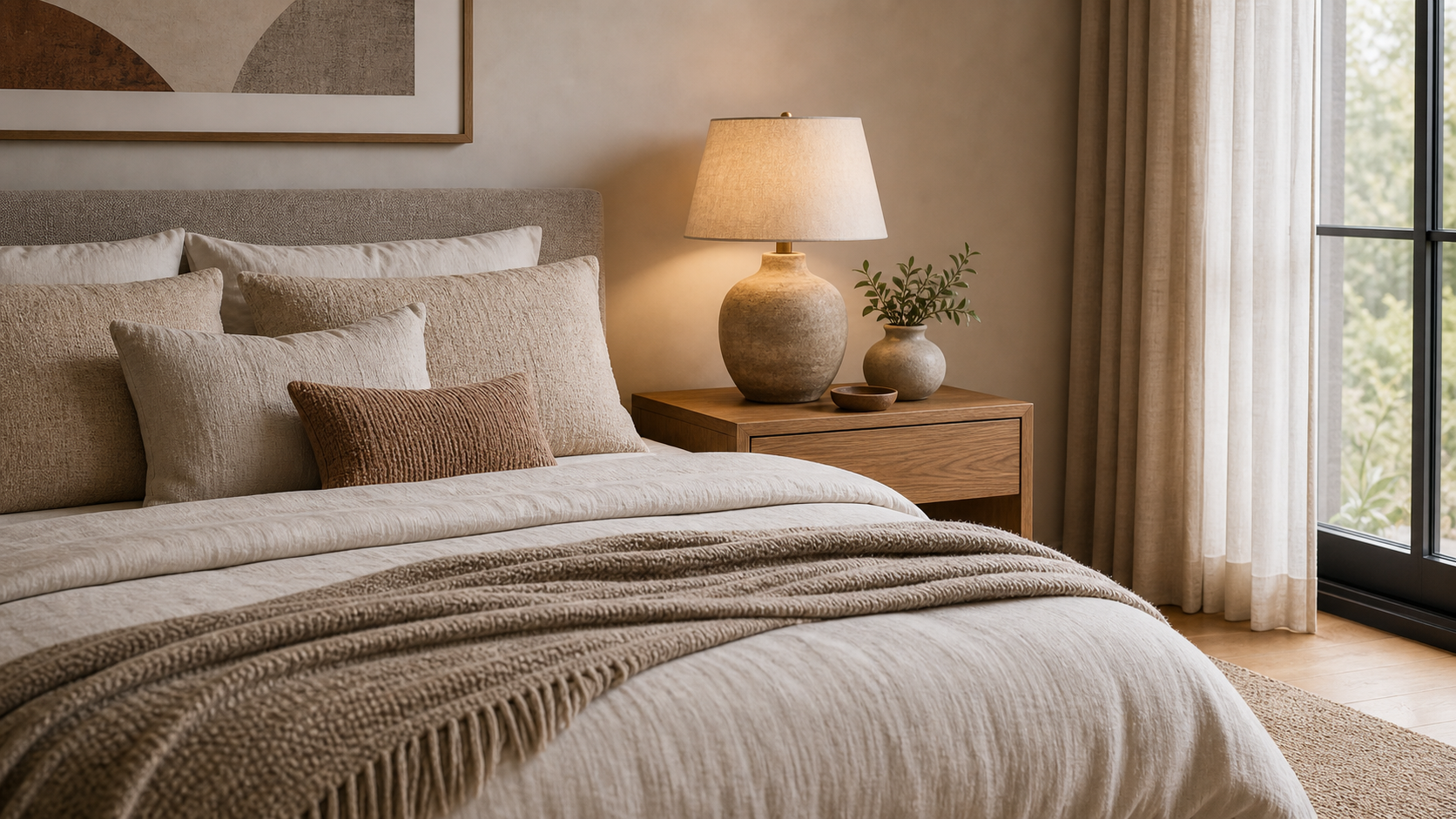
Texture gives a bedroom comfort without filling it with too many objects A woven rug linen bedding cotton curtains wool throws oak nightstands ceramic lamps and soft baskets can make a simple room feel layered
This is important in modern bedrooms because clean furniture can sometimes feel plain Texture brings warmth back into the space without making it visually loud A room with simple colors can still feel rich when the surfaces are varied
Start with bedding because it is the largest soft layer in the room Use sheets that feel good every day Add a quilt duvet or coverlet with a quiet texture Add pillows that support the bed shape without turning the bed into a display that is hard to use
Curtains are another strong texture layer They soften the window and make the room feel more finished A rug can soften the floor and frame the bed zone A bench at the foot of the bed can add texture and function when the room has enough space
Keep decorative objects simple A few strong pieces often look better than many small ones One lamp one bowl one book stack or one branch arrangement can give a surface personality without stealing calm from the room
Make storage part of the design
Storage is not separate from bedroom design It is one of the main reasons a bedroom feels calm or stressful Clothes bedding chargers books skin care and daily objects all need a place If storage is weak the room becomes visually busy even when the furniture is beautiful
Start with closed storage for the things that do not need to be seen Wardrobes drawers under bed storage and cabinets can keep the room quiet Open shelves can work but only when they are edited and easy to maintain
The best bedroom storage sits close to the habit it supports Keep night items near the bed Keep folded clothes near the dresser Keep extra blankets near the closet bench or under the bed Keep daily accessories in a drawer tray or basket instead of letting them spread across surfaces
Use vertical space when the room is small A tall wardrobe can hold more without taking too much floor area A wall shelf can hold a few useful pieces A hook behind a door can handle robes or bags without adding another furniture piece
Storage should not make the room feel heavier Choose simple fronts quiet handles and colors that connect to the rest of the palette A large storage wall can feel calm when it blends with the wall color or uses warm wood in a controlled way
Layer lighting for rest and routine
Bedroom lighting should support both function and mood You need enough light to get dressed clean fold clothes and move safely You also need soft light for reading relaxing and preparing for sleep One overhead light cannot do all of this well on its own
Use three simple layers when possible General light helps the whole room Task light helps beside the bed dresser desk or reading chair Accent light adds warmth and depth through lamps wall sconces or small shelf lighting
Bedside lighting matters most because it is used every day The lamp should be easy to reach and comfortable for reading A wall sconce can save space in a small room A table lamp can add softness and shape A pendant over a nightstand can feel modern when it is placed carefully
Warm bulbs usually work best in bedrooms They make fabric wood and wall colors feel softer Cool light can make the room feel too active at night Dimmers are helpful because the room needs different light in the morning afternoon and evening
Look at the room after sunset The corners should not disappear The bed should feel soft and inviting The dresser should have enough light to be useful The whole room should feel quiet rather than bright and harsh
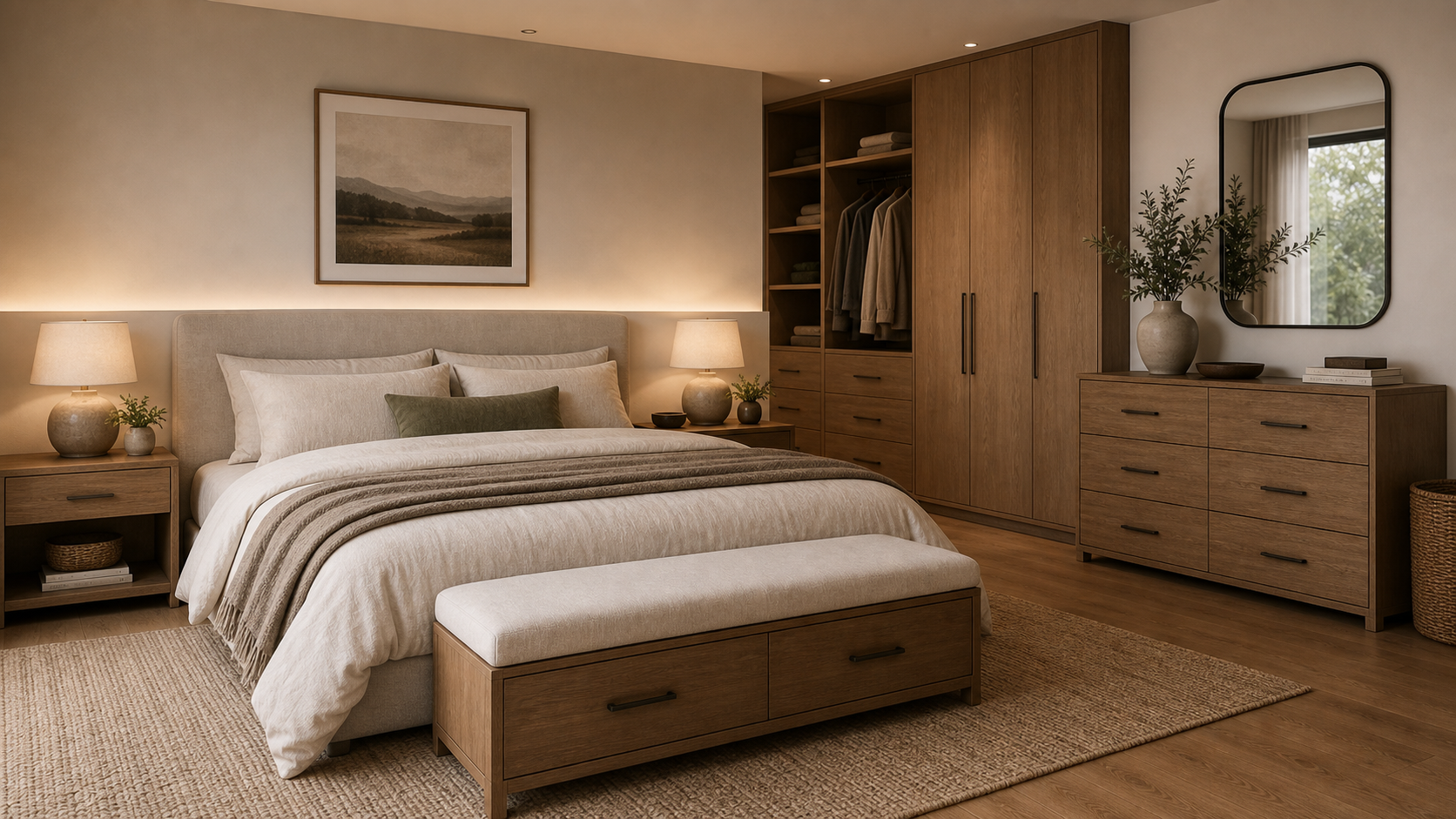
Design the bed wall with intention
The bed wall is usually the strongest visual moment in the bedroom It does not need to be dramatic but it should feel finished A headboard art pair of sconces wallpaper paneling or simple paint color can give the room a clear center
A tall headboard can make the room feel grounded A low headboard can keep the space light Art above the bed can add personality A textured wall can bring depth without adding many objects The best choice depends on the room size and the mood you want
Keep the bed wall balanced with the nightstands and lighting If one side has a large lamp and the other side has a tiny lamp the wall may feel uneven If the art is too small the bed may look unfinished If the headboard is too heavy the room may feel crowded
In a small bedroom choose one main idea for the bed wall Do not combine too many strong details A simple headboard with warm lamps and calm bedding can be enough In a larger room you can add more presence through paneling larger art or wider nightstands
Keep the floor plan easy to clean
A bedroom should be easy to reset at the end of the day This matters because a calm room is not only about how it looks after styling It is about how quickly it can return to order after normal life
Leave clear floor space where people walk Keep baskets drawers or hooks near the places where items usually land Avoid furniture legs and small tables that create awkward cleaning corners if the room is already tight
The floor should help the room feel open A rug can frame the bed and soften the step in the morning It should be large enough to feel connected to the bed and not like a small island in the middle of the floor
In a bedroom with hard flooring the rug adds comfort and sound softness In a bedroom with carpet a flat weave or textured rug can still help define the bed zone and add visual warmth
Finish with personal details
A calm modern bedroom should not feel anonymous Personal details make the room feel real A favorite book a framed print a handmade ceramic a travel object a family photo or a small scent ritual can make the bedroom feel like yours
The key is editing Choose fewer personal details and give them space A room can feel more meaningful when objects are selected carefully instead of spread everywhere The bedroom should feel personal but not visually noisy
Use the nightstand as a daily test If it fills with random items the room needs better storage If it holds only what you use and one small beautiful detail the room will feel calmer every morning
Modern bedroom design is not about perfection It is about rhythm The room should help you slow down put things away rest well and wake up in a space that feels steady
Check the whole room before adding more
When the main pieces are in place step back and check the bedroom as a whole Look at the doorway view the bed wall the walking path the window the storage and the lighting The room should feel connected from every angle
If something feels wrong remove before adding Take away one extra pillow clear one surface move one chair or simplify one corner A calm bedroom often improves when there is less visual pressure
Then add only what the room still needs More warmth can come from texture More function can come from storage More atmosphere can come from lighting More personality can come from art or a small object with meaning
The best bedroom design ideas are practical and quiet They make the room easier to use and easier to love A calm modern bedroom should feel beautiful because it supports real life every single day
Cet article contient des liens d’affiliation. Si vous effectuez un achat via ces liens, nous pouvons percevoir une commission, sans frais supplémentaires pour vous.
Related guides
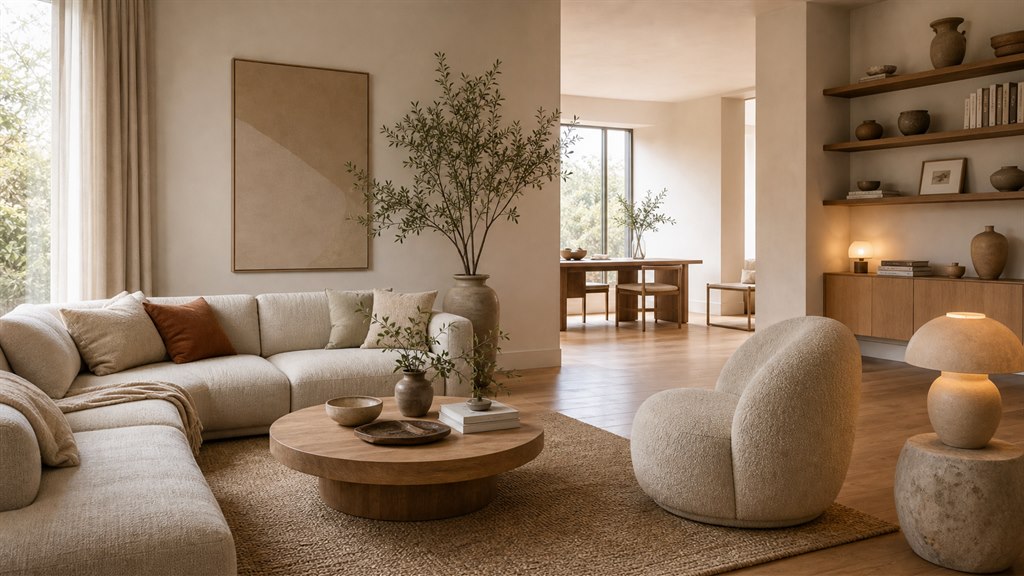
Styles and trends
Home decor styles for modern homes
Compare the best home decor styles for modern homes and learn how to choose a style direction that feels practical timeless and personal
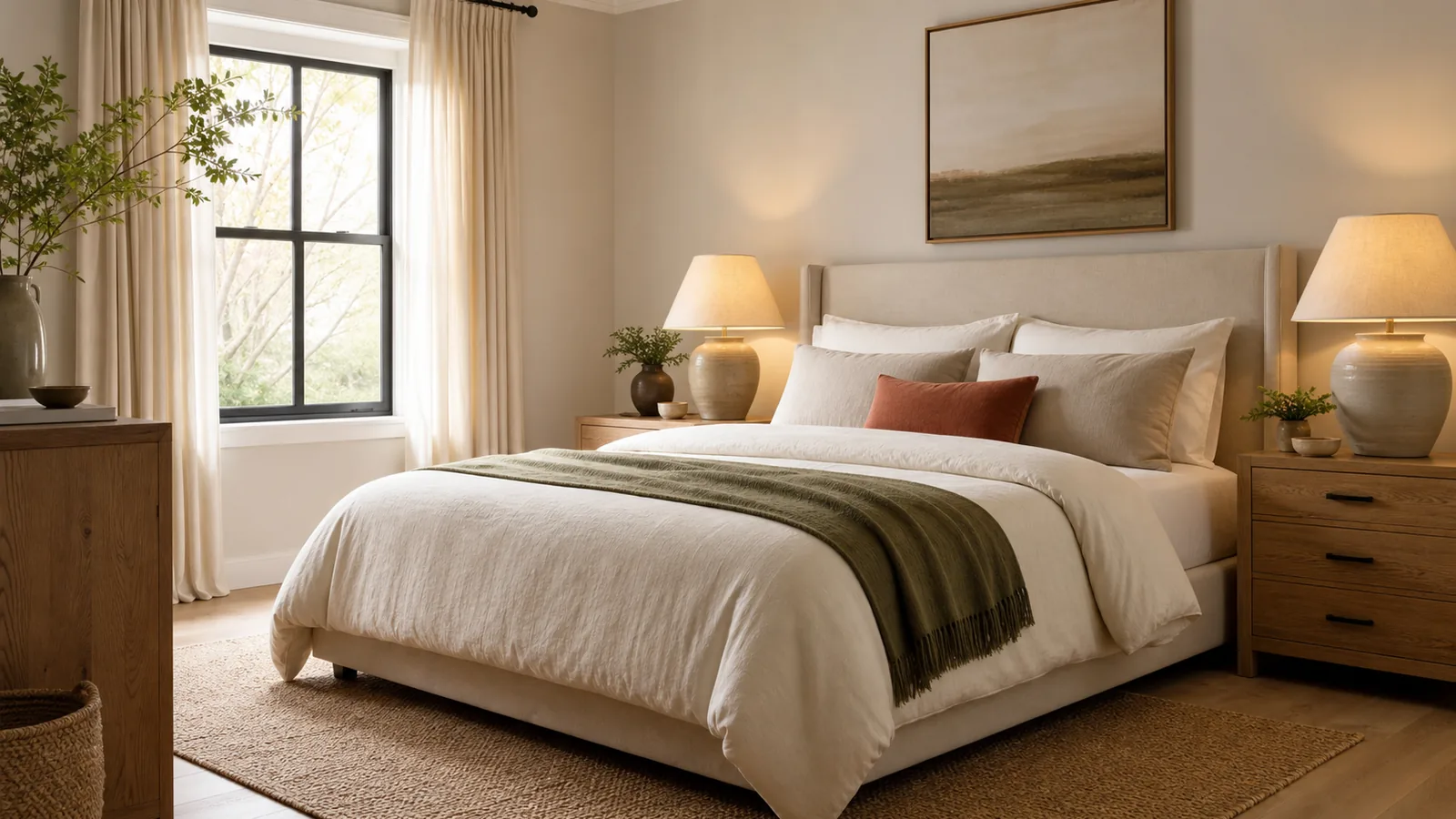
Room Decor Ideas
Bedroom color ideas for a calm and timeless look
Bedroom color ideas for a calm timeless look using warm neutrals soft contrast natural texture and restful lighting
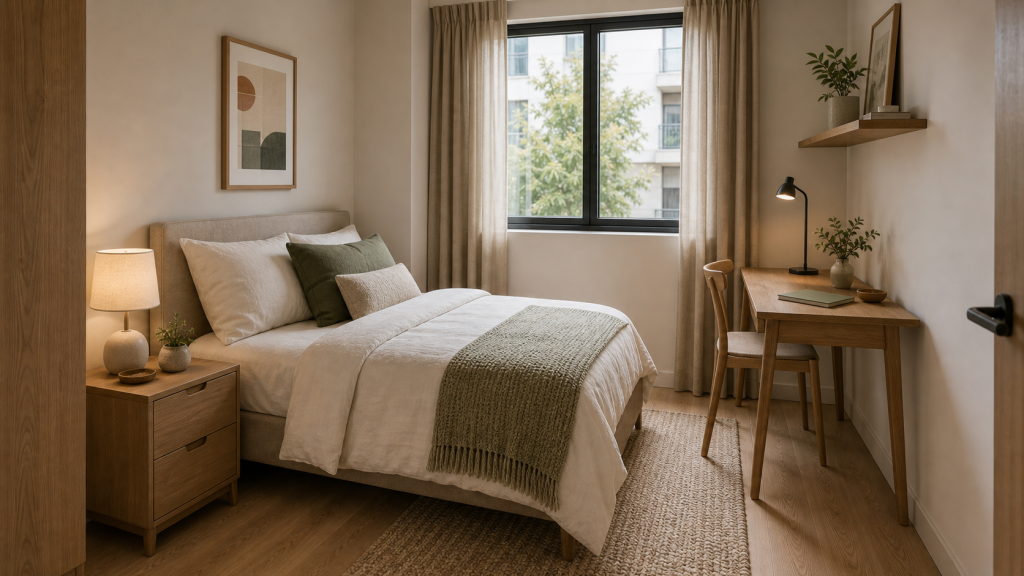
Room Decor Ideas
Bedroom furniture arrangement ideas for better flow
Bedroom furniture arrangement ideas for bed placement nightstands storage scale dresser flow and a calm modern bedroom layout