
Decor Accents
Modern home decor accent ideas a complete guide to styling a warm polished home
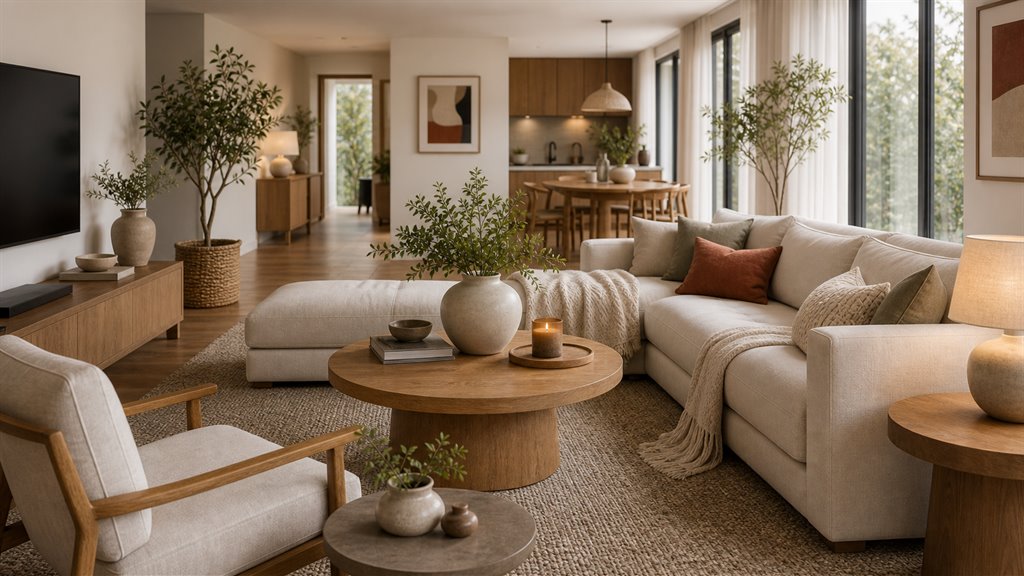
Modern home decor accent ideas are the small decisions that make a room feel complete A sofa can be the right size and a table can be beautiful but the room still feels unfinished when the accent layers are weak Accents bring warmth rhythm texture and personality They tell the eye where to rest and they help a home feel cared for without making it crowded A polished home is not made by adding more objects It is made by choosing the right objects and giving each one a job A lamp should make the room warmer A pillow should soften the seating A tray should organize small pieces A vase should add height or shape A rug should ground the room A mirror should bring light or balance When accents have purpose the whole room feels calmer This guide is the main pillar for the Decor Accents category It gives the full accent system for modern rooms and helps every smaller styling choice fit into one clear plan
Start with the feeling of the room
Before choosing decor accents decide how the room should feel A living room may need warmth and comfort An entryway may need order and welcome A bedroom may need softness and quiet A dining room may need focus and mood The feeling should guide every accent choice because the same object can work in one room and feel wrong in another Walk into the room and notice what is missing If the room feels cold it may need warm lighting wood texture woven pieces or softer textiles If it feels flat it may need height contrast and layered materials If it feels busy it may need fewer objects and more empty space If it feels unfinished it may need one stronger focal point instead of many small decorations This first step saves money because it stops random buying A room rarely needs more decor just because it has empty surfaces Sometimes the strongest design move is to remove the small pieces that distract from the main shape of the room
Choose a calm base before adding accents
Decor accents work better when the room has a calm base The base includes large furniture walls flooring curtains and the main rug If the base already has many colors and patterns the accents should be quieter If the base is very neutral the accents can bring more texture and shape A warm modern home usually looks best when the base uses a limited palette Cream stone taupe soft white pale wood walnut black bronze muted green and clay tones can work together when they are repeated with care The accents should not introduce too many new ideas at once They should support what the room already started Think of the room in layers The first layer is furniture The second layer is lighting and rugs The third layer is pillows throws wall decor vases trays bowls books plants and small objects If the third layer fights with the first two layers the room feels confused If it supports them the room feels designed
Use lighting as the first accent layer
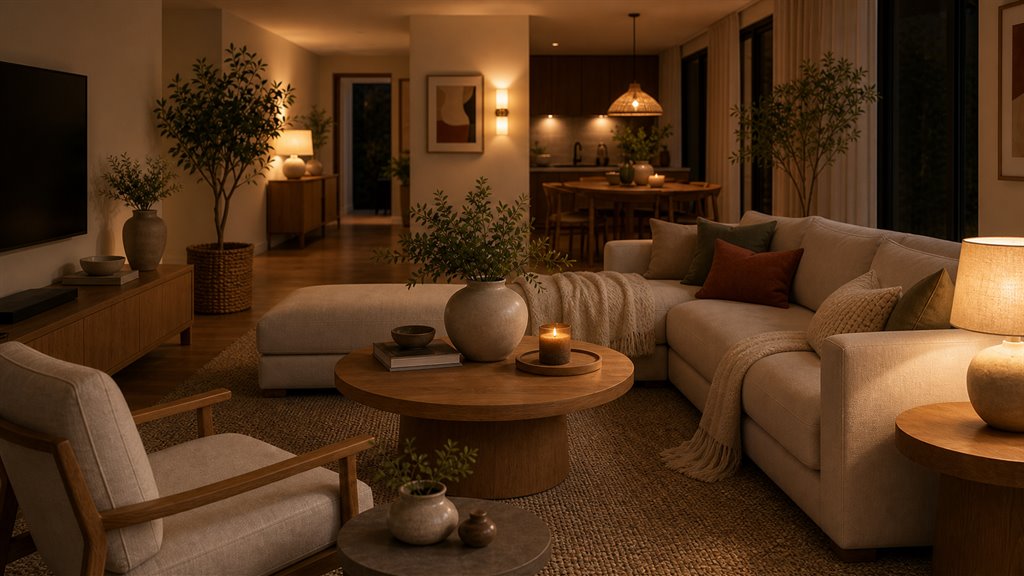
Lighting is often the accent that changes the room most A beautiful lamp gives shape and warmth even before it is turned on At night it changes the way every color texture and object appears A room with only one ceiling light can feel flat even when the furniture is good Use lighting in several places instead of one bright source A table lamp can soften a console A floor lamp can make a reading corner useful A wall light can add height beside art or shelves A small lamp on a kitchen counter can make the evening feel calmer Lighting should help the room work and also help it feel good Choose warm bulbs for spaces where people relax Cool light can make neutral rooms feel sharp while warm light makes wood fabric and ceramics feel richer The bulb is part of the decor because it controls the mood of the room
Layer textiles for comfort and depth
Textiles make a room feel lived in Pillows throws curtains rugs and soft seat cushions bring comfort and quiet movement A modern room can feel too hard when it has only clean lines and smooth surfaces Textiles soften those lines and make the home feel more human Use texture before strong color Linen cotton wool boucle velvet knit jute and woven fabrics can create depth without making the room loud A cream sofa with cream pillows can still feel rich when the fabrics are different A neutral room becomes more interesting when the eye can see soft contrast between materials Pillow styling should stay practical A sofa should not need ten pillows to look finished Two larger pillows two medium pillows and one lumbar cushion can be enough for many rooms A throw at the arm or foot of the sofa adds warmth without taking over the seat The best textile plan is beautiful but still easy to use
Make wall decor feel intentional
Wall decor should solve the wall and not simply cover it A large blank wall above a sofa may need one strong artwork A hallway may need a simple row of frames An entryway may need a mirror A bedroom may need calm art that supports rest The right wall decor depends on the job of the wall Scale matters more than most people think Small art on a large wall can make the room feel unfinished One large piece often looks better than several tiny frames If you use a gallery wall keep the spacing calm and the colors connected A modern neutral home usually feels better when wall decor has restraint Mirrors should also have purpose They can reflect light open a narrow space or complete a console wall A mirror that reflects clutter can make the room feel busier so place it carefully Sculptural wall pieces are useful when a room needs texture more than another framed image
Style tables with fewer better pieces
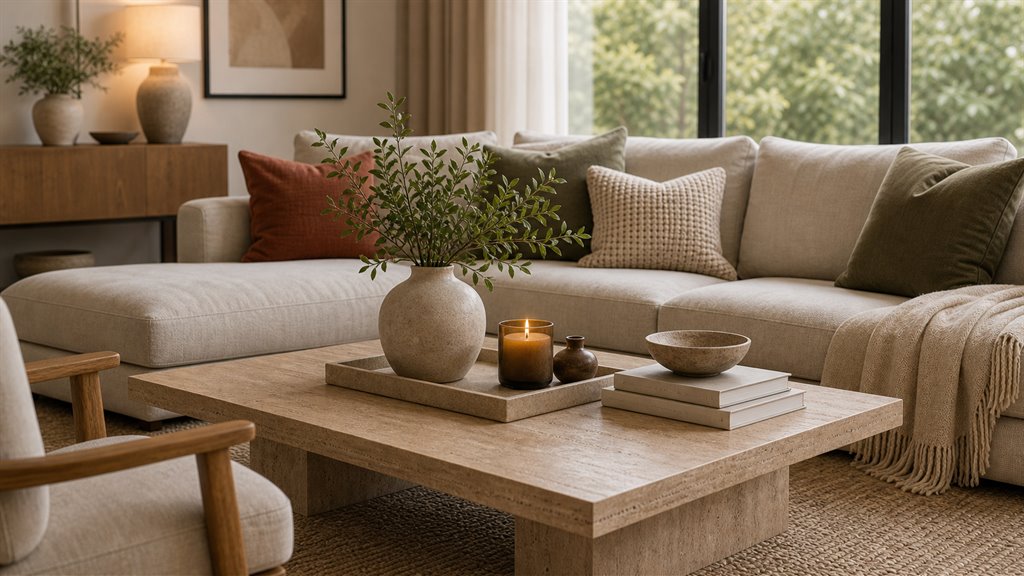
Tables are where accent decor can quickly become cluttered Coffee tables consoles sideboards shelves and nightstands all need breathing room A surface should have enough decor to feel intentional and enough empty space to stay useful A simple formula works well Use one grounding object one tall object and one low object A tray can ground the arrangement A vase or lamp can add height A bowl book candle or small box can add a lower shape This formula keeps the surface balanced without making it look forced Trays are helpful because they turn several small items into one clear group A tray on a coffee table can hold a candle vase bowl and remote control while still looking tidy A tray on a dresser can hold fragrance jewelry or everyday objects A tray is not only decorative It creates order
Use vases bowls and trays with restraint
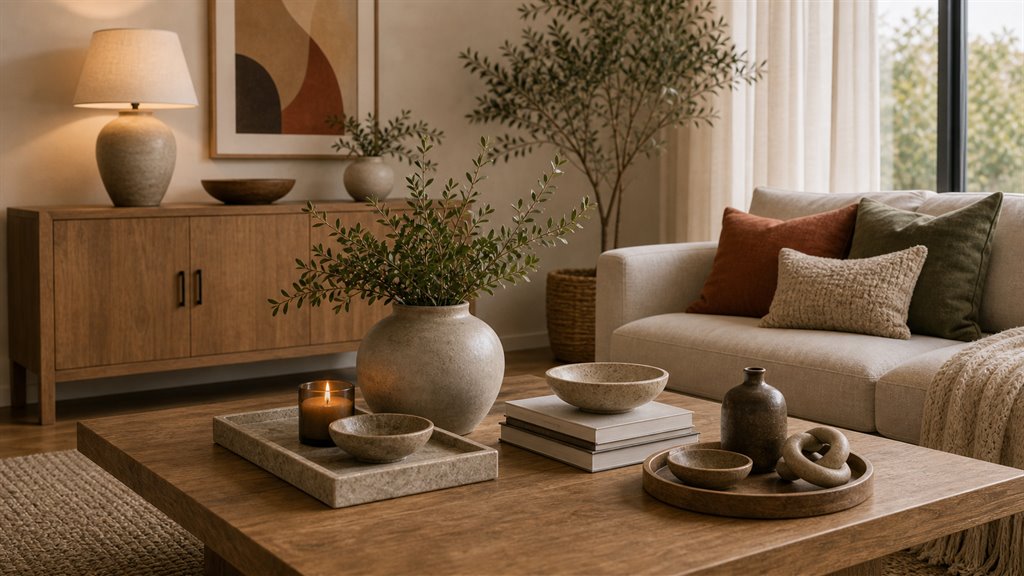
Vases bowls and trays are useful because they bring shape without needing much space A vase adds height A bowl adds softness and a natural landing place A tray creates boundaries These objects work best when their materials repeat the room Wood ceramic glass stone metal and woven textures should connect to furniture lighting or textiles nearby Odd number groupings often feel natural Three objects on a tray can look balanced when they vary in height and shape A vase a bowl and a book can be enough A console may need one taller lamp one framed piece and one low bowl Shelves need more editing because they can become crowded fast Leave empty space between groups so the eye can breathe Decor accents should look collected but not random A room feels more mature when every small object belongs to the same mood even if the pieces come from different places
Ground the room with rugs and curtains
Rugs and curtains are large accent layers because they change the whole room even when they are quiet A rug grounds the furniture and makes a seating area feel complete Curtains soften windows and add height A room with good furniture can still feel unfinished without these textile layers The rug should be large enough to connect the furniture If the rug is too small it can make the room feel disconnected Curtains should relate to the wall color or the main textile palette Light linen curtains can make a modern room feel softer Heavier curtains can bring warmth and privacy when the room needs more depth Use rugs and curtains to repeat color and texture from other accents A woven rug can connect to baskets A warm curtain can connect to wood tones A patterned rug can guide the pillow colors This makes the room feel joined together instead of decorated in separate parts
Bring in natural elements
Natural elements make modern rooms feel less stiff Plants branches dried stems wood bowls stone trays woven baskets and ceramic vessels add warmth without relying on bright color A plant can soften a sharp corner A branch in a vase can add height A wood bowl can make a coffee table feel grounded Choose natural accents by shape and scale A tall branch works well on a console or dining sideboard A small plant works well on a shelf or nightstand A large floor plant can fill a corner better than a group of small objects Natural accents should support the architecture of the room and not block daily movement
Edit the room from the doorway
The final step is editing Stand at the doorway and look at the room as a whole Notice what catches the eye first Notice if the surfaces feel crowded Notice if one side of the room feels heavier than the other A polished room usually has a clear focal point a few strong textures and quiet areas where nothing needs to happen Remove objects that repeat the same job If there are too many small vases keep the strongest one If there are too many pillows remove the ones that do not add comfort color or texture If a shelf looks busy create groups and leave space between them Editing is not the end of styling It is the part that makes styling look intentional
Use accent decor to correct proportions
Accent decor can also correct proportions inside a room A low sofa can feel more balanced with a tall floor lamp beside it A wide console can feel calmer with one large artwork instead of many tiny frames A small coffee table can look more complete with one tray that gathers the styling into a clear shape When accents answer the proportions of the furniture the room looks more intentional Height is especially important in modern rooms because many furniture pieces stay low A lamp tall branches stacked books wall art or a mirror can lift the eye and make the room feel complete Width matters too A long sofa needs wall decor that feels wide enough A big empty table needs a centered group that does not look lost A narrow entry needs pieces that stay slim and useful
Build accents around daily habits
The best accent plan respects how the home is used A living room that hosts guests may need trays coasters soft lighting and easy seating comfort A quiet reading corner may need a lamp side table throw and one small bowl for daily objects A family room may need washable pillows baskets and surfaces that stay simple to reset This is where a room starts to feel experienced rather than staged Beautiful accents should not fight real life They should make the room easier to use A bowl can hold keys A tray can control remote controls A basket can hide extra throws A lamp can make the evening calmer A well styled home feels polished because the useful pieces are also beautiful
Modern home decor accent checklist
Start with the feeling of the room Choose accents with purpose Use lighting first Add textile warmth Keep wall decor scaled correctly Style tables with fewer stronger pieces Use vases bowls and trays for shape and order Ground the room with rugs and curtains Bring in natural elements and edit from the doorway A warm polished home does not need endless decoration It needs accents that work together The best rooms feel comfortable because every object has a reason and every surface has enough space to breathe
[EXTERNAL_SUPPORTING_LINK_PLACEHOLDER: Add approved external supporting link here]
Related guides
Decor Accents
Coffee table decor ideas for living rooms
Use coffee table decor ideas with trays books bowls florals candles and scale tips for a polished living room.
Decor Accents
Decorative lighting ideas for a warm modern home
Use decorative lighting ideas to layer warm ambient, task, and accent light with lamps, shades, and practical placement for a calm modern home every day.
Decor Accents
Decorative vases bowls and tray styling ideas
Learn how to style decorative vases bowls and trays with height texture color and balance for a curated modern home.